Essix vs Fixed
Keeping your teeth straight after braces or Invisalign is just as important as the treatment itself. Many people wonder: “Are fixed lower retainers better than Essix retainers?”
This is one of the most searched questions online, especially for families trying to choose the best long-term option.
This article explains the difference using easy 6th-grade language, but also includes real orthodontic research published after the year 2000. We also look closely at periodontal health, because your gums and bone matter just as much as keeping teeth straight.
What Is a Fixed Lower Retainer?
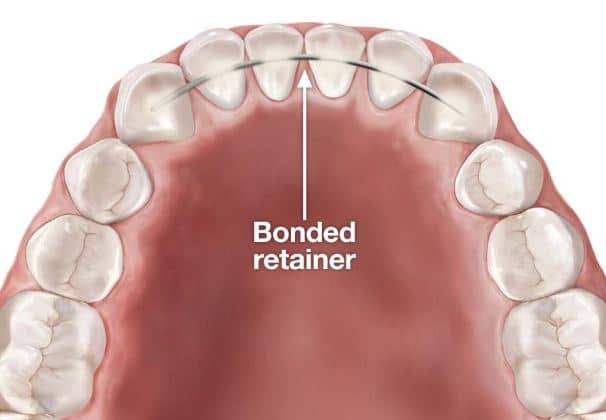
A fixed lower retainer is a small wire glued to the back of your bottom front teeth.
You cannot take it out. It stays in place all the time.
What people like about fixed retainers:
- They work 24/7
- You can’t lose them
- They keep the lower teeth very stable
What people do NOT like:
- Harder to clean
- Can collect plaque and calculus
- The glue or wire can break and need repairs
What Is an Essix Retainer?
An Essix retainer is a clear plastic retainer that looks like an Invisalign tray.
You must wear it as instructed, usually at night.
What people like about Essix retainers:
- Easy to clean
- Clear and almost invisible
- No wire on teeth
What people do NOT like:
- Easy to lose or break
- You must remember to wear it
- Can warp if left in a hot car or washed in hot water
Why Retainers Matter So Much
Teeth naturally want to move back to their old positions after treatment.
This is called relapse.
Research shows that everyone needs long-term retention to keep teeth straight. Fixed and Essix retainers both work — but they work differently.
What Research Says About Stability (Keeping Teeth Straight)
Fixed retainers usually keep lower front teeth straighter in the long term.
Here’s what studies found:
1. O’Rourke et al. (2016)
A randomized controlled trial showed that fixed retainers kept lower front teeth more stable than vacuum-formed retainers (Essix) during 12 months of use.
Reference: O’Rourke N. et al., 2016.
2. Forde et al. (2018, Part 1)
Another large RCT also found that bonded (fixed) retainers led to less relapse compared to Essix retainers after one year.
Reference: Forde K. et al., 2018.
3. Al-Moghrabi et al. (2018)
This study followed patients for 4 years. Fixed lower retainers kept the lower front teeth straighter long-term compared with removable retainers.
Reference: Al-Moghrabi D. et al., 2018.
4. Systematic Reviews (2022)
Two systematic reviews — the strongest type of research — confirmed that fixed lower retainers provide better long-term stability in the mandibular (lower) front teeth.
References: Bellini-Pereira S. et al., 2022; Husain S. et al., 2022.
Conclusion from stability research:
👉 Fixed retainers are usually better at keeping lower front teeth stable, especially if you’re worried about crowding coming back.
But What About Gum and Bone Health? (Periodontal Health)
This is where things get interesting.
Some people worry that fixed retainers trap plaque and harm the gums.
Let’s look at the science.
What Research Says About Periodontal Health With Fixed Retainers
1. Storey et al. (2018, Part 2)
In a large RCT, patients with fixed retainers had:
- more plaque
- more calculus
BUT - no major gum disease problems over 12 months
Reference: Storey M. et al., 2018.
2. Al-Moghrabi et al. (2018)
At the 4-year mark, both fixed and Essix retainers showed some gum inflammation if patients didn’t clean well — but neither caused serious periodontal disease.
Reference: Al-Moghrabi D. et al., 2018.
3. Petsos et al. (2024)
A very recent randomized clinical trial found that 73.3% of patients with fixed retainers had healthy gums after 12 months, with no major differences in gum recession compared with removable retainers.
Reference: Petsos H. et al., 2024.
This study is important because it shows that in healthy patients with good hygiene, fixed retainers do NOT automatically cause gum damage.
So What Does This Mean for Real Life?
If you clean well → fixed retainers are safe.
If you do NOT clean well → Essix might be healthier for your gums.
Fixed retainers do not cause gum disease — but they can increase plaque if you don’t brush and floss carefully.
Periodontal Health: Who Should Avoid Fixed Retainers?
A dentist or orthodontist may avoid fixed retainers if someone:
- Has a history of gum disease
- Has deep periodontal pockets
- Has bone loss
- Is not good at flossing
- Has high plaque and calculus buildup
These people may do better with Essix retainers because they can clean teeth more easily.
Periodontal Health: Who Benefits From Fixed Retainers?
Good candidates for fixed retainers include:
- Teens who may forget to wear a removable retainer
- People with strong relapse risk
- Patients with rotation or crowding before braces
- People who lose things often
- Anyone needing 24/7 retention
If gum health is good and brushing habits are strong, fixed retainers are a great option.
Daily Life: Which Retainer Is Easier to Live With?
Fixed Retainers – Easy or Hard?
Many people find fixed retainers convenient because they “just stay there.”
But cleaning is the biggest responsibility.
Most people must use:
- Floss threaders
- Superfloss or interdental brushes
- Regular dental cleanings
Essix Retainers – Easy or Hard?
Essix retainers are easy to clean, but you must remember to wear them.
They also crack or warp, so sometimes you need replacements every 1–2 years.
What Do Patients Prefer? (According to Research)
Research shows mixed results.
- Some people prefer fixed retainers because they don’t have to think about them.
- Others prefer Essix because they feel “cleaner” and “easier.”
In the Forde et al. (2018) trial, patient satisfaction was similar for both types, but people with fixed retainers sometimes felt the wire with their tongue.
Are Fixed Lower Retainers Better for Teens?
Often, yes.
Teens are more likely to forget to wear Essix retainers.
This can lead to relapse.
Because fixed retainers work full-time, they are usually the safer choice for teens — as long as they have good brushing habits.
Are Essix Retainers Better for Adults?
For adults worried about gum health, Essix retainers may be a better fit because the teeth are easier to clean without the wire.
Adults who already have periodontal concerns often prefer removable retainers.
Cost Differences
Fixed retainers
- Cost more upfront
- May need repairs
- Last several years if well maintained
Essix retainers
- Cheaper to replace
- Can break or warp
- Need replacements over time
In the long run, cost can be similar depending on the patient.
How to Decide Which Retainer Is Best for YOU
Your orthodontist will look at: